

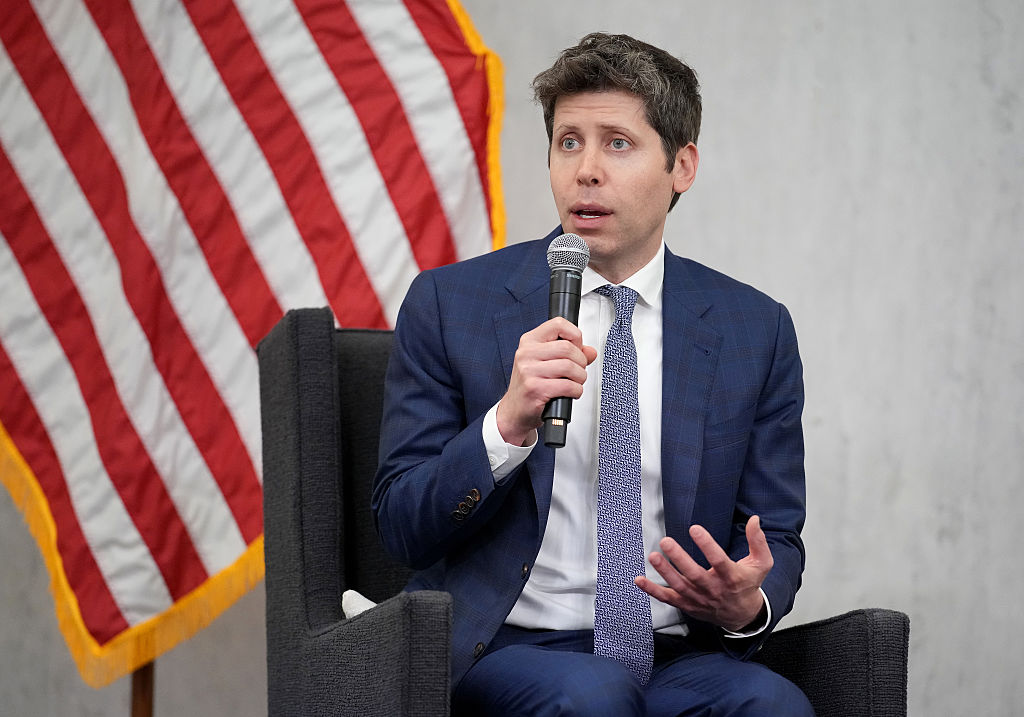
Sam Altman, the CEO of OpenAI, recently made waves when he used his op-ed to articulate a two-sided critique of former President Donald Trump. On his blog, for example, he once called Trump a “demagogic hate-monger.” He expressed his concerns about a lack of a credible strategy to get the economy growing again. Altman’s remarks coincide with the nation facing a historic immigration crisis. People are anxious and understandably worried about the actions of U.S. Immigration and Customs Enforcement (ICE) agents.
In that blog post, Altman recognized the risk he was taking by coming out against Trump in such a public way. He admitted that despite progress, he hasn’t yet addressed the administration’s negative immigration agenda. Further, he has remained silent on the militarized deployment of Border Patrol agents into American cities. Instead, he zeroed in on the dangerous precedent being set by Trump’s contempt for norms and traditions, and the urgent need for accountability.
“Part of loving the country is the American duty to push back against overreach,” Altman stated. And, he said, needed pushback in order to make sure that leaders at the top aren’t able to abuse their power.
Altman expressed concern over various actions taken by the Trump administration, labeling them as “irresponsible” and drawing comparisons to historical dictators. In 2016, he had previously remarked on his blog that Trump “is not merely irresponsible. He is irresponsible in the way dictators are…” He reflected on the chilling nature of Trump’s behavior by stating, “To anyone familiar with the history of Germany in the 1930s, it’s chilling to watch Trump in action.”
Even with these critiques, Altman was not reticent in lavishing praise on Trump’s approach to leadership. He commended the former president for proposing an independent investigation. This public investigation will help Minnesota officials prevent future incidents that violently involve federal agents. He noted that he was encouraged by Trump’s more recent responses and expressed hope that the president would “rise to this moment and unite the country.”
In an internal Slack message that was leaked to the New York Times, Altman remarked, “What’s happening with ICE is going too far.” This statement reflects his growing concern about the actions taken by immigration enforcement agencies and their impact on communities across the nation.
Altman then underscored how Trump’s incendiary rhetoric often distracts from Trump’s real threats and agenda. More importantly, he feels the former president has no real plan or vision for economic revitalization. He stated, “Make America Great by keeping us safe from outsiders,” but questioned whether such statements genuinely contribute to national unity.
These confused signals, sent by Altman on two different occasions now, have angered many observers, including J.J. Colao. Colao challenged Altman for attempting to “have it both ways” by labeling Trump a strong leader while still voicing significant concerns about his actions. He retorted that Altman’s laudation reduces the weight of his criticism.
“On net, I think his statement is helpful, but the performative tribute to the president does a lot to diminish it.” – J.J. Colao
In response to this backlash, Altman did not back down on his view that public discourse needs a space for accountability. He called on the American people—especially Republican politicians—to begin publicly calling and accepting nothing less than accountability for overreach and misconduct.
“This would be a good time for us all—even Republicans, especially Republican politicians who previously endorsed Trump—to start speaking up,” Altman said, emphasizing the importance of collective responsibility in addressing leadership failures.
Altman’s role is especially important, and critical, at this moment. OpenAI is pursuing IRL growth at breakneck speed, recently raising at least $40 billion and currently negotiating its own $100 billion, while being valued at $830 billion. As he navigates these corporate responsibilities while addressing political issues, his stance illustrates a broader concern for ethical leadership and accountability in governance.
