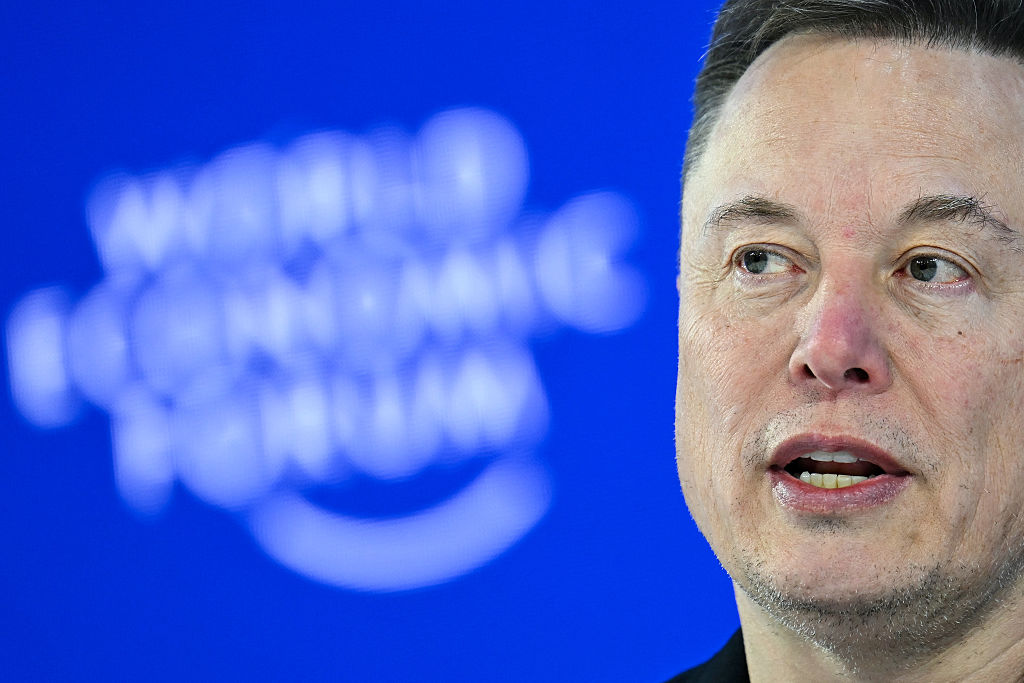
Elon Musk’s attention has turned to lunar exploration. This move coincides with him overseeing significant leadership shakeups at his own artificial intelligence company, xAI. The entrepreneur has a moonshot idea to create an independent city on the moon. His plans are based on a 2015 U.S. law which permits private entities to own resources mined from celestial objects. This action takes place despite the lack of limitations in the 1967 Outer Space Treaty. That treaty is what keeps nations and companies from colonizing the moon or claiming rights to lunar resources.
Musk is largely using SpaceX as his vehicle of choice for executing these plans. The company’s goal now is to develop a city that’s completely self-sustaining on the surface of the moon. Musk hosted an all-hands meeting for xAI staffers on Tuesday night. From the recent Coordinating Council meeting, he opened up about the future vision and expansion of his companies and explained their current leadership transition. Tony Wu, one of the original co-founders of xAI, made the announcement about his departure late Monday night. Just ahead of him, fellow co-founder Jimmy Ba—who reported directly to Musk—departed the company. xAI is undergoing a song-changing overhaul as it sets its sights on the future. Most strikingly, six of its 12 founding members have since departed from the company.
Musk has previously estimated it would take more than 20 years to establish a self-sustaining Mars colony. Yet, he believes we can accomplish lunar development in less than half that time frame. This fact sheet shares some of the urgency that he feels in advancing humanity’s presence beyond Earth, reflected in his timeline.
As Musk said, “You need to go to the moon,” a comment that highlights how serious Musk is about the importance of lunar exploration.
The strategic pivot towards the moon aligns with Musk’s broader vision: to create the world’s most powerful AI model using proprietary real-world data. No wonder Musk considers this goal to be central to xAI’s mission. In his mind, breakthroughs in artificial intelligence are inextricably linked to our pursuit of finding new frontiers amongst the stars.
The legal framework for extracting resources on the moon is a patchwork, fraught with complications. The 2015 U.S. law does, however, open up a major loophole under which you can own materials you mine from the moon. It runs counter to the spirit of international agreements, including the Outer Space Treaty. To begin with, this treaty asserts, unequivocally, that no nation or private actor has any sovereignty over celestial bodies.
Mary-Jane Rubenstein, a noted scholar on space law, elaborated on these complexities: “It’s more like saying you can’t own the house, but you can have the floorboards and the beams.”
Furthermore, Musk faces challenges from international competitors. Yet both China and Russia have failed to make any pledge to abide by the international legal order on which Musk’s lunar ambitions are based. This growing divergence begs the question as to how these shifting global geologic dynamics may play a role in future lunar missions and ownership of resources.
Meanwhile, SpaceX is gearing up for a landmark initial public offering (IPO) this coming summer. Because they’re aiming at the unbelievably high valuation of $1.5 trillion, the stakes are sky-high. Investors and venture backers view Musk’s lunar aspirations as intertwined with xAI’s core mission and potential success.
“It’s difficult to imagine what an intelligence of that scale would think about,” Musk reflected, hinting at the revolutionary implications of merging AI with space exploration.
The other key element to this narrative is Musk’s practice of technology leadership. He has asserted, “If you’re moving faster than anyone else in any given technology arena, you will be the leader.” It’s this same belief that informs his iconoclastic experimentation throughout SpaceX and xAI, and everywhere else he operates.