

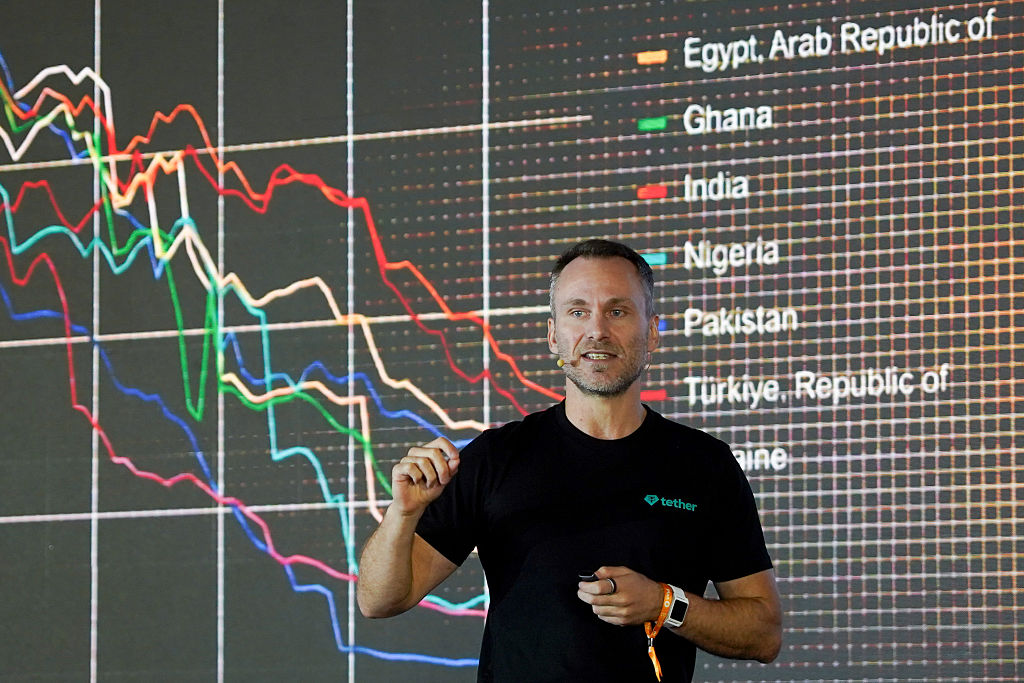
We covered Tether, probably the most important actor in the crypto space, recently when they pivoted on their narrative. From doubts and darkness, it has grown to impressive financial robustness. Once portrayed as potentially fraudulent, the company now boasts a staggering $30 billion in excess reserves beyond the amount required to redeem all outstanding tokens. Tether’s flagship stablecoin, USDT, has a market capitalization of $187 billion. Through this initiative, the company hopes to change what it means to be a good actor in the financial ecosystem.
It’s been a rough few months for Tether, being called out by analysts in recent months like S&P Global Ratings that called USDT’s stability “weak.” The company has made important moves to increase its credibility and business transparency. Tether profits more than $15 billion in 2025, indicating the strength of their business model and smart investment strategy. The investments represent a robust vote of confidence, with each contributing beyond $1 billion to the German AI robotics company Neura. Furthermore, $775 million has been transferred to the social media platform Rumble.
Additionally, Tether has built relationships with over 290 law enforcement agencies in over 60 countries. The company argues that by utilizing blockchain technology, they can provide an unprecedented level of transparency. As such, it complicates the monitoring of illicit activities more than conventional banking systems allow.
Significantly, Tether introduced USAT, a U.S.-regulated stablecoin issued on the Pamana-based Anchorage Digital Bank. This combined effort represents a major movement toward regulatory acceptance and legitimacy for the financial sector. Further, Tether has recently blocked $225 million in a so-called “pig-butchering scam” earlier this year. This enforcement action further proves their robust dedication to protecting users.
Tether’s reserves consist of around 140 tons of gold, worth about $24 billion. These reserves are stored at Cantor Fitzgerald, once again solidifying Tether’s dedication to maintaining a stable asset-backed currency. Paolo Ardoino, Tether’s Chief Technical Officer, illustrated the need for diversification in the asset portfolio of Tether’s reserves.
“The reason why we invest in land, cattle, agriculture, modern tech, in gold – the common denominator is ensuring that Tether can remain a cornerstone of the world that is our user.” – Paolo Ardoino
Tether’s user base, meanwhile, has grown to an astonishing 536 million users. It’s on fire right now, bringing on 30 million new users per quarter, enshrining its status as the 800lb gorilla of the cryptocurrency space. Ardoino underscores Tether’s mission by stating, “The motto of Tether is to be the stable company,” highlighting the company’s focus on providing users with reliable financial solutions.
Along with past criticisms, Ardoino continues to believe in Tether’s long-term course and future prosperity. He estimates that 90% of the time, traditional financial institutions are missing out on an entire demographic.
“We went to all the people left behind by the traditional financial system.” – Paolo Ardoino
He is convinced that Tether provides the stability that the people who need it most. Ardoino views Tether as not just a company but as “a social impact company that is changing the lives of hundreds of millions of people and providing them something they never had before – stability.”
In light of these previous assessments, Ardoino tells me, they’re proud of their resilience. Among the many insightful observations he makes, he comments on the review by S&P Global Ratings, and compares their monitoring to that of other past financial bubbles.
“If that is the same S&P that completely missed the subprimes, I’m proud they’re considering us weak.” – Paolo Ardoino
Tether’s changing story includes its vision for technology. Ardoino envisions a future where advanced smartphones become commonplace in developing regions such as Africa and South America within three to five years.
“Today’s most powerful smartphones will be commonplace in Africa and South America within three to five years.” – Paolo Ardoino
The company is smartly re-investing in some cutting-edge technology. This step is intended to make it more accessible and user-friendly to users all over the world.
